
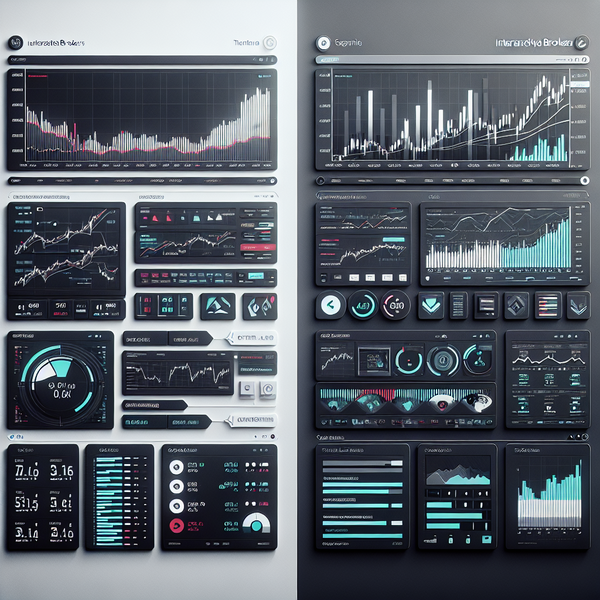
When serious traders search for the ultimate platform for **high volume trading**, two names dominate the conversation: Interactive Brokers and Charles Schwab. Both are giants in the brokerage world, but their approaches differ sharply when it comes to catering to professional, high-frequency, and institutional traders. If you’ve ever wondered which platform offers the edge for large-scale trades, this guide breaks it down with clarity and precision.
Understanding the Needs of High Volume Traders
High volume traders require more than just a sleek interface. They need fast execution speeds, low transaction costs, robust tools, and reliable data. The slightest delay or added expense can impact long-term profitability. Platforms like Interactive Brokers and Charles Schwab design their ecosystems around traders who make frequent, high-value trades, but their tools and pricing models reveal different philosophies.
Interactive Brokers vs. Charles Schwab: Core Strengths
Interactive Brokers: Built for Professionals
Interactive Brokers (IBKR) has built its reputation on providing a professional-grade platform. It offers direct market access, fractional shares, and access to global markets across equities, futures, options, and forex. The trading platform, notably Trader Workstation (TWS), is packed with customizable analytics, real-time risk tracking, and smart routing technology that prioritizes best execution.
For high volume traders, the cost per trade is often the make-or-break factor. IBKR stands out with its tiered pricing structure that decreases commissions as trading volume rises. With minimal spreads and advanced margin options, it’s a magnet for hedge funds, prop traders, and professionals executing multiple orders daily.
Charles Schwab: Power Meets User Experience
Charles Schwab, on the other hand, dominates with a customer-first philosophy and a robust platform designed to balance accessibility with sophistication. Its StreetSmart Edge trading system provides solid tools, clean data visualization, and customizable layouts. Schwab also shines in areas like research, education, and client service—key elements that help individual traders scale into high-volume territory.
While Schwab’s commissions are often negligible for standard trades, high frequency traders might pay more depending on order types and volume. However, the company’s deep liquidity, stable infrastructure, and zero-fee ETF access strengthen its overall appeal for diversified traders.
Trading Costs and Fees Comparison
Commissions and Spreads
Interactive Brokers operates with transparent pricing, where fees depend on the number of shares traded. This structure benefits traders executing thousands of transactions monthly. By contrast, Schwab keeps pricing simple with straightforward commission-free stock trading, yet hidden costs can arise in the form of wider spreads or slower routing during volume surges.
- Interactive Brokers: Tiered pricing rewards scale; extremely competitive for massive trade volumes.
- Charles Schwab: Zero commission on standard trades; straightforward but less optimal for hyperactive accounts.
Margin Rates and Account Minimums
Margin interest is another crucial element for high volume participants. Interactive Brokers typically offers lower margin rates, which can significantly improve returns for leveraged traders. Schwab’s rates, while reasonable, are higher by comparison. For traders running large positions daily, this difference compounds over time, making IBKR the leaner option for active leverage users.
Execution Speed and Technology
Order Routing and Latency
In high volume trading, milliseconds can determine profitability. Interactive Brokers’ SmartRouting system scans multiple exchanges to deliver the best available price almost instantly. It continuously optimizes order execution across markets, giving traders superior fill rates.
Charles Schwab, though highly stable, focuses more on reliability than microsecond speed. Its routing engine prioritizes execution quality but may lack the laser precision IBKR traders rely on. Still, Schwab’s infrastructure remains solid for most retail and semi-professional traders engaging in heavy daily activity.
Trading Platforms and Tools
Interactive Brokers: Trader Workstation (TWS)
The TWS platform is a powerhouse toolset featuring advanced charting, options analytics, AI-based scanners, and integrated risk controls. For high volume traders, its API allows custom algorithmic strategies, direct order automation, and data integration. It’s built for those who value precision, complexity, and control over every trade.
Charles Schwab: StreetSmart Edge
StreetSmart Edge delivers a more intuitive interface with drag-and-drop customization, portfolio analytics, and integrated news feeds. It feels friendlier and more accessible, especially to traders transitioning into higher volume activity. It also syncs well with Schwab’s mobile platforms and online portals.
Market Access and Product Diversity
Global Reach vs. Domestic Strength
One core difference between Interactive Brokers and Charles Schwab is global reach. IBKR offers access to over a hundred financial centers worldwide, enabling high volume traders to diversify across regions and asset classes. From futures in Asia to European bonds, everything is connected through a single account.
Charles Schwab, while global in reputation, is more focused on the U.S. market. It’s ideal for traders deeply invested in American equities, ETFs, and options, but less tailored for those seeking exposure to international markets at scale.
Customer Support and Resources
Support Quality
Both brokers score well in customer support, but their priorities differ. Interactive Brokers focuses on efficiency, offering chat and ticket-based systems aimed at experienced traders. Schwab, in contrast, emphasizes human connection, with detailed support and branches across many regions. For volume traders, IBKR’s technical efficiency often outweighs the need for personal interaction, but Schwab’s comprehensive assistance remains unmatched for relationship-driven investors.
Educational and Research Tools
High volume traders rely on research for both macro insights and micro timing. Schwab’s educational ecosystem stands out for its seminars, tutorials, and in-depth analysis. Interactive Brokers complements this with a steady stream of analytical tools and institutional data feeds that appeal to quants and professionals. Both serve different segments of the advanced trading community effectively.
Security, Stability, and Regulatory Standing
Interactive Brokers and Charles Schwab are both heavily regulated and maintain robust security practices. Encryption, two-factor authentication, and secure data centers are standard features. For traders moving large daily volumes, platform reliability is non-negotiable—and both firms deliver top-tier uptime records. Schwab’s physical presence adds reassurance, while IBKR’s advanced tech ecosystem ensures global reliability.
Which Broker Excels for High Volume Trading?
Where Interactive Brokers Leads
- Ultra-low commissions and margin rates
- Superior order execution speed and global reach
- Professional-grade automation and algorithmic trading options
Where Charles Schwab Shines
- Excellent user interface for semi-professional traders
- Superior client service and educational tools
- Seamless integration with long-term investing products
Final Verdict: Choosing the Right Broker for You
If your primary objective is high volume trading efficiency, Interactive Brokers stands at the forefront. Its cost efficiency, advanced platform, and global capabilities clearly appeal to active and professional traders.
Charles Schwab, however, offers a better ecosystem for those who value comprehensive support and hybrid investing. If you want a platform blending active trading with wealth management and personalized service, Schwab is hard to beat.
Ultimately, the right choice depends on your style and priorities: do you value speed and low cost above all, or do you prefer comfort and guidance? Either way, both Interactive Brokers and Charles Schwab remain elite options in the fast-paced world of high volume trading.