
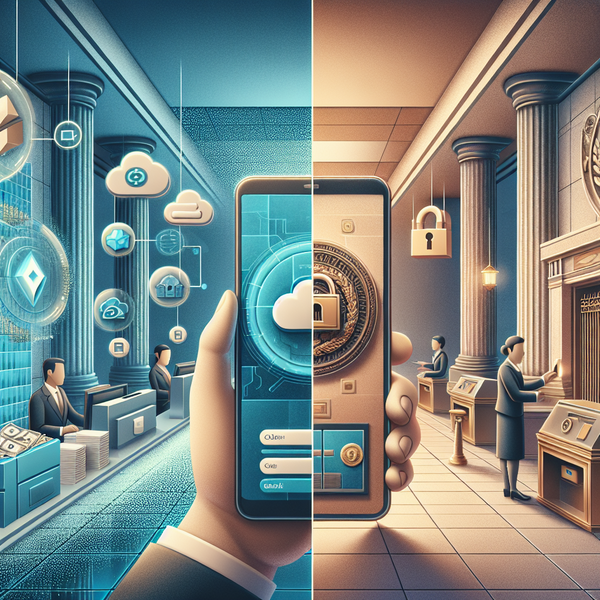
The convenience of managing money with just a few taps has made digital banking the everyday choice for millions. Yet, for all its speed and accessibility, going fully virtual can mean losing more than you think. Comparing digital banking vs. brick-and-mortar banks reveals surprising trade-offs that go beyond simple technology differences.
Understanding the Shift Between Digital Banking vs. Brick-and-Mortar
In today’s connected world, financial institutions are transforming rapidly. Traditional banks with physical branches once dominated, offering face-to-face service and a sense of community trust. Now, digital banking lets customers open accounts, transfer money, and invest without ever stepping inside a branch. The appeal is clear: faster transactions, lower fees, and instant accessibility.
However, the shift to digital-first models raises an important question: What do we lose when the personal element of brick-and-mortar banking fades?
Why Digital Banking Has Become So Appealing
Digital banking represents independence and innovation. People want to manage their finances on their own time, right from their smartphones, without waiting in lines or dealing with paperwork. Modern digital banks provide real-time notifications, simple budgeting tools, and seamless integration with payment apps.
- Speed: Instant transfers and mobile check deposits.
- Lower costs: Reduced overhead means fewer fees.
- 24/7 access: Manage finances anytime, from anywhere.
- Smart tools: Automated insights and expense tracking.
These features create a strong case for why so many people prefer digital-first options. Yet, the debate of digital banking vs. brick-and-mortar continues because convenience often comes with hidden drawbacks.
What You Really Lose with Digital Banking vs. Brick-and-Mortar
Despite the freedom of online systems, the absence of in-person engagement changes the nature of customer relationships. Users gain efficiency, but they lose something deeply human in the process.
Loss of Personal Connections
Traditional branches build relationships. Staff know their customers, sometimes even their families. This creates trust and reassurance during challenging times. In a purely digital setting, communication shifts to automated chatbots or generic call centers. While technology is efficient, it lacks empathy and individual understanding.
Reduced Financial Guidance
Brick-and-mortar banks often provide one-on-one support for complex financial needs — from mortgage advice to small business funding. With digital banking, valuable personalized guidance is replaced by algorithms. These tools may recommend standard solutions, but they cannot fully grasp your unique goals.
Security Concerns
Online systems bring their own risks. Data breaches, phishing attacks, and identity theft remain major threats. While banks invest heavily in cybersecurity, there is still a psychological comfort in handing documents to a trusted local teller rather than uploading them to a digital portal.
Community and Local Support
A community bank is more than a financial institution — it’s part of the local ecosystem. Physical branches sponsor events, contribute to charities, and provide local employment. Fully digital banks, with no physical presence, simply cannot replace this local impact. In the larger digital banking vs. brick-and-mortar debate, community value is an often-overlooked factor.
The Invisible Costs of Digital Banking
While the cost savings and user-friendly apps are tempting, relying solely on digital banking can create hidden costs and limitations.
- Limited access for older generations: Many seniors struggle to adapt to mobile-based systems and miss the reassurance of in-person service.
- Technical failures: Digital glitches, server downtimes, or app updates can temporarily block access to funds.
- Digital fatigue: Constant notifications and the need to self-manage every transaction can be overwhelming.
- Loss of privacy: Sharing personal data online comes with inevitable exposure to tracking and targeted marketing.
Understanding these subtle disadvantages helps users find a more balanced approach to personal finance management.
Brick-and-Mortar Banking Still Has Its Place
Despite the rise of digital alternatives, traditional banks still provide irreplaceable benefits. Meeting a banker face-to-face can resolve complex issues faster and more personally than any automated system. Some customers simply feel more confident when financial decisions are guided by human interaction.
Moreover, brick-and-mortar banks offer reliability in emergencies. If your debit card fails or an account is locked, a branch visit often gets you immediate assistance. That sense of safety and accessibility continues to attract individuals who value trust over convenience.
Balancing Digital Banking vs. Brick-and-Mortar: The Hybrid Future
The smartest strategy might be combining both systems. Many customers now adopt a hybrid approach, keeping a traditional bank for stability and personal service, while using digital tools for speed and flexibility. This balance brings the best of both worlds — efficiency from digital systems and reassurance from human connections.
Finding Your Banking Balance
To choose wisely, consider your personal financial habits:
- If you value convenience and low fees, digital banking may suit your lifestyle.
- If you prefer personalized guidance and community presence, brick-and-mortar may be worth keeping.
- For most, maintaining both remains the ideal solution for security and flexibility.
Understanding your needs helps you decide which system aligns with your values, rather than simply following trends.
Answering Common Questions About Digital Banking vs. Brick-and-Mortar
Is digital banking safer than traditional banking?
Both offer strong security, but digital banking relies heavily on user awareness. Cybersecurity best practices, such as enabling two-factor authentication and avoiding public Wi-Fi for transactions, greatly reduce risks. Physical banks may not face the same online threats, but fraud and errors can still occur in person.
Can you get a loan without visiting a branch?
Yes, most digital banks process loans online. Yet, in-person appointments often provide tailored advice and better rates because relationship banking factors in your personal history and long-term goals.
Will physical banks disappear?
Unlikely. While many branches are downsizing, the demand for personal interaction remains. A future where digital and physical experiences coexist is far more realistic than total digital domination.
Conclusion: What You Really Lose — and Gain
Choosing between digital banking vs. brick-and-mortar is ultimately about priorities. Digital platforms give speed, cost savings, and flexibility. Brick-and-mortar banks deliver trust, guidance, and local relationships. What you lose depends on what you value most — convenience or connection.
The truth lies somewhere in the middle. The most financially confident individuals use both types of banking strategically. As technology evolves, understanding these differences ensures you gain the benefits of progress without losing the human touch that makes banking genuinely rewarding.